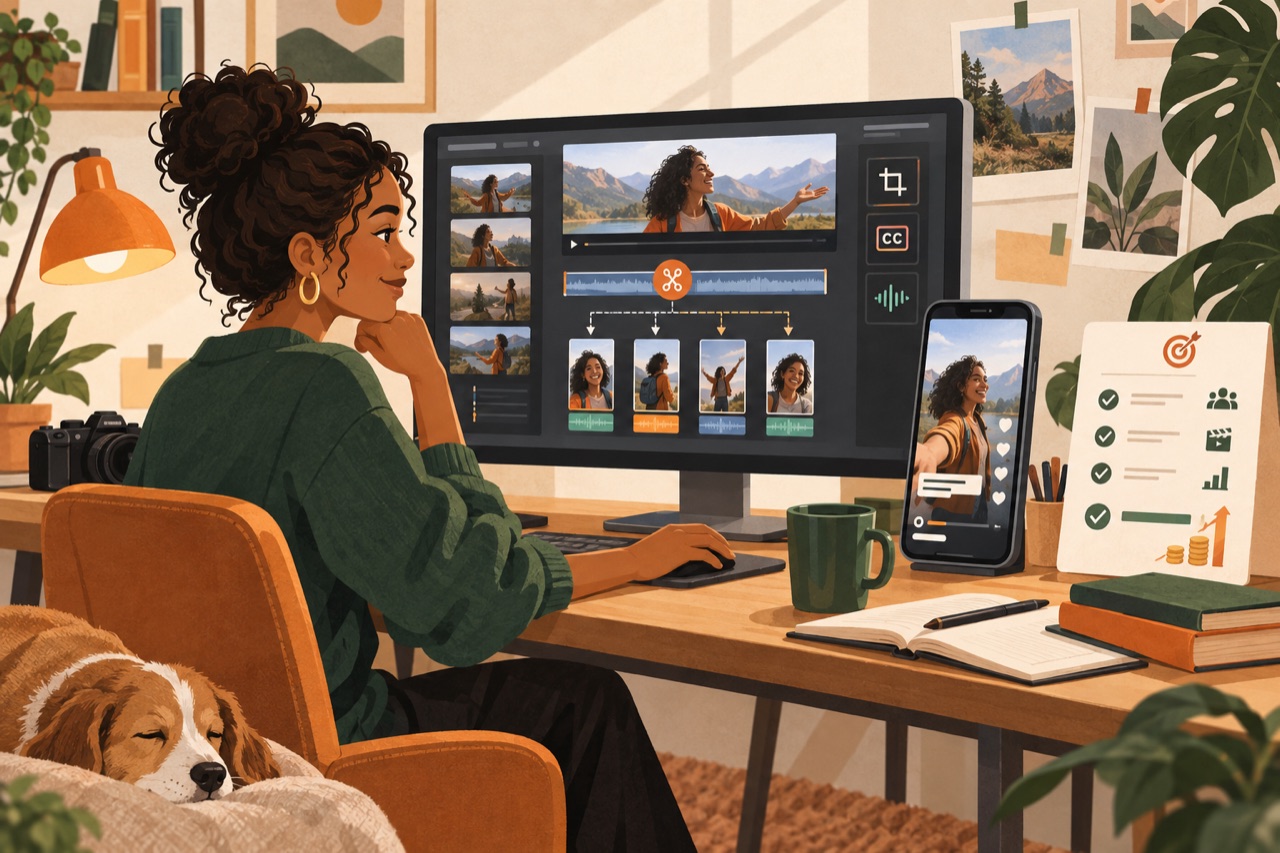
What a clipper actually does
A clipper takes long footage somebody else made — a stream, a podcast, a launch video, an interview — cuts the best 20 to 60 seconds out of it, and posts it as a short. A brand or a creator funds a pool of money, and you get paid a rate per hundred thousand views your clip earns.
That is the whole job. You are not building an audience, you are not making original content, and nobody cares how many followers you have. What you are being paid for is judgment about which moment is worth cutting, and the speed to cut it before forty other people cut the same one.
What you need before your first clip
Less than people assume. A phone genuinely works for the first month. What you cannot skip is an editor you know well enough to work fast in, and accounts on the platforms your chosen campaign actually accepts.
- An editor — CapCut on a phone or desktop is free and enough to start
- Accounts on at least two platforms, ideally TikTok plus one other
- Somewhere to store source footage, because you will re-cut the same VOD repeatedly
- A way to get paid — most campaigns run on PayPal, some on crypto
What the process should look like
These are simplified screen examples. Always follow the live campaign brief when its rules differ.
Picking your first campaign
This is where most beginners lose their first month, and it is almost always the same mistake: chasing the highest rate on the board. A campaign paying $300 per 100k with a 100,000-view minimum will pay you nothing at all until a clip breaks six figures, which for a new account is rare. A campaign paying $30 per 100k with a 2,000-view minimum pays you on your third clip.
The number that matters most when you are starting is the view minimum, second is how full the pool already is. A pool at 90% claimed is a campaign that may run out of money before your clip is even reviewed.
- Low view minimum — under 10,000 if you can find it
- Pool under half claimed, so there is budget behind the rate
- Platforms you already post on, not ones you would have to build from zero
- A brief you can actually read and follow in one sitting
Read the brief. Actually read it.
Every campaign has rules: which footage you may use, claims you must not make, whether you have to tag an account, where the clip must be posted, and how to submit it. Clips get rejected far more often for brief violations than for being bad clips.
Two minutes on the brief before you start editing is the highest-value two minutes in this entire job. If a rule is ambiguous, ask in the campaign’s Discord before you post rather than after.
Your first ten clips
Treat the first ten as calibration, not income. You are learning which hooks hold, how the platform treats reposted footage, and how fast that particular campaign reviews submissions. Post them across at least two campaigns so a single strict reviewer does not skew your read.
Track four things per clip: campaign, hook used, views at 48 hours, and whether it was approved. After ten clips you will see a pattern that no guide can tell you in advance, because it is specific to your editing and your accounts.
What good looks like after a month
A realistic first month is a few hundred dollars, not a few thousand. The clippers earning serious money have usually spent six months learning which moments travel and building enough account history that the platforms stop throttling their reposts.
The people who quit in week three almost always quit because they picked one high-rate campaign, made eight clips, cleared the minimum on none of them, and concluded the whole thing was a scam. It is not a scam — it is a volume game with a learning curve, and the curve is front-loaded.
The board shows every campaign we can see, ranked by how hot they run and how likely you are to actually get paid — including how full each pool already is.